Technical question
How do EV charging, PV generation and storage assumptions alter voltage profiles, line loading and N-1 security in a medium-voltage distribution network?
KTH project · Power flow · Grid planning
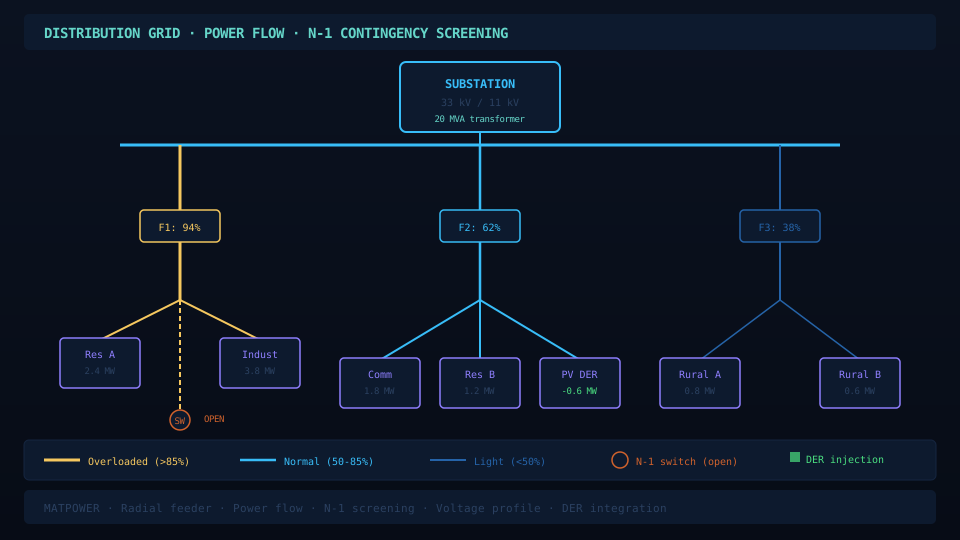
Distribution-grid simulation study using a CIGRE MV network, 24-hour load profiles, EV charging profiles, transformer-level connection assumptions and N-1 contingency analysis.
Evidence dashboard
How do EV charging, PV generation and storage assumptions alter voltage profiles, line loading and N-1 security in a medium-voltage distribution network?
The study used pandapower's CIGRE medium-voltage test network, then layered base power flow, 24-hour time-series profiles, EV charging additions and contingency runs to locate voltage and loading bottlenecks.
The outputs were spreadsheet-backed voltage, line-loading and transformer-loading tables, including a rigorous contingency case where line loading exceeded 110% and transformer loading exceeded 104% in the stressed configuration.
This is coursework-scale evidence, so it should support the Energy Systems track rather than carry a standalone grid-flexibility identity. It is still useful because it connects decarbonisation technologies to the physical constraints they create in distribution networks.
Relevance
This project supports Energy Systems Modelling because it connects decarbonisation technologies to the physical network constraints they create. EV charging, PV and storage are not just scenario labels; they change line currents, transformer loading and operational margins in a real distribution-grid calculation workflow.