Abhijith SivaprasadanM.Sc. Sustainable Energy Engineering · KTH · Stockholm, Sweden
Thermal Engineering / Portfolio
From heat transfer to physical insight.
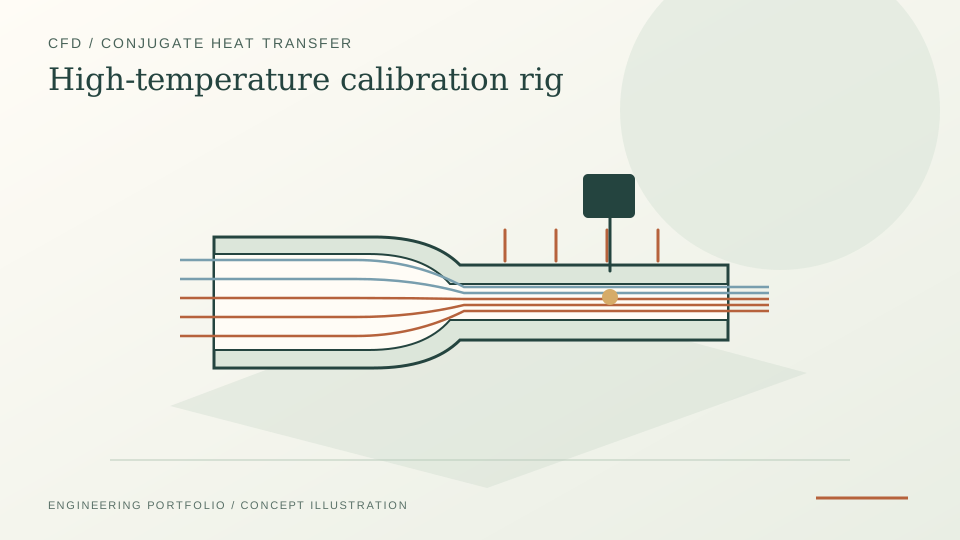
My thermal work combines compressible CFD and conjugate heat transfer with instrumentation and numerical checks. At Siemens Energy, my master’s thesis investigated a high-temperature pressure-sensor calibration rig and its thermal behaviour. This work shows how I move from geometry and boundary conditions through mesh checks to physically interpretable design comparisons.
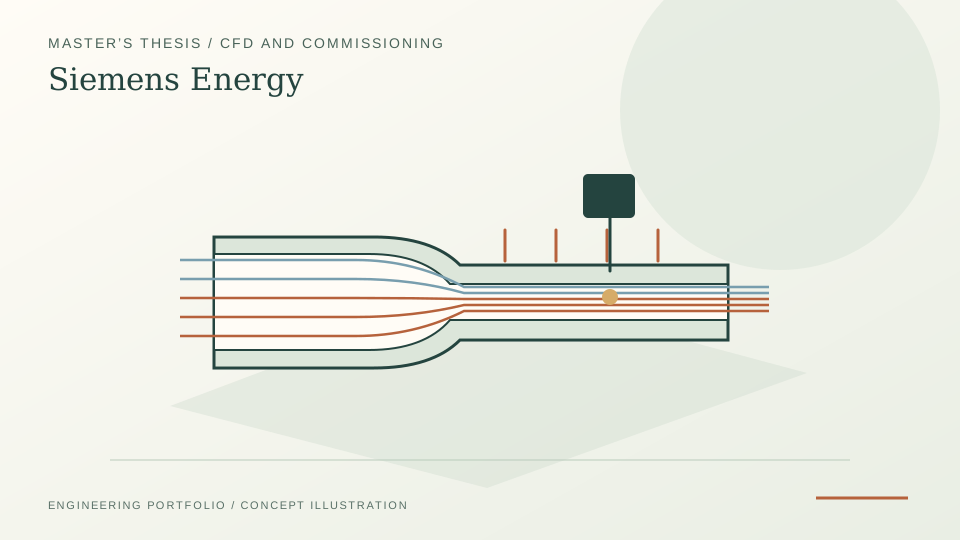
Industrial thesis at Siemens Energy Finspång combining preliminary NI-DAQ/LabVIEW commissioning and supervised heater-failure troubleshooting with a 15-run numerical CFD/CHT comparison of Pulsatorn reducer geometries.
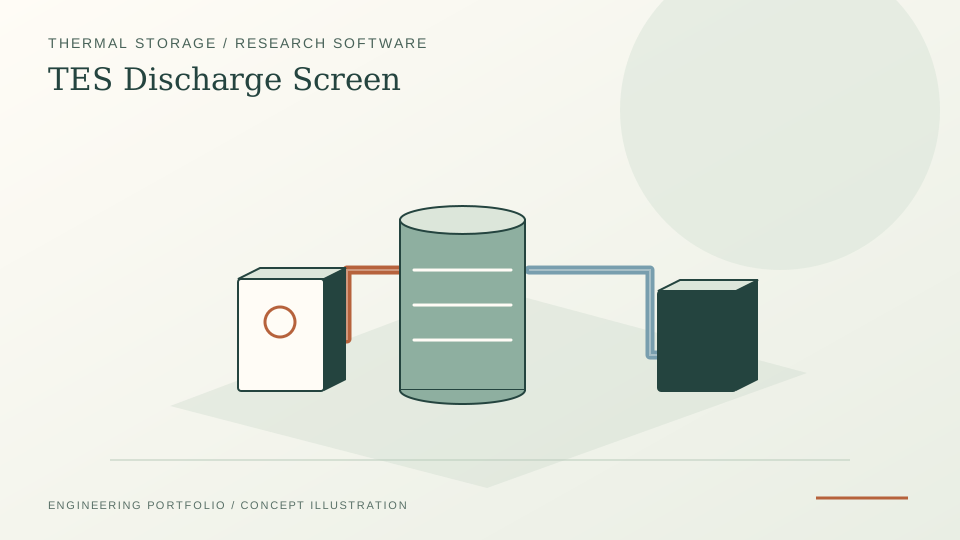
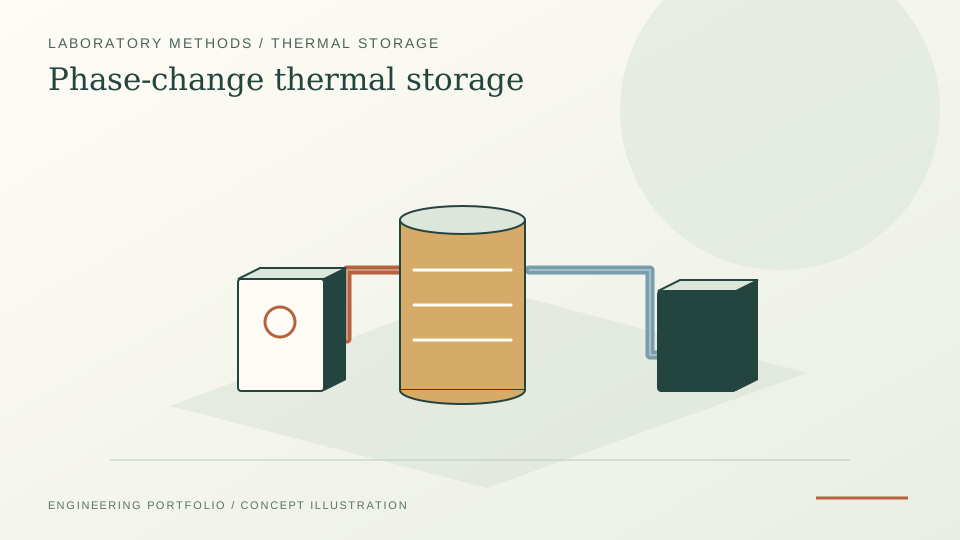
Techno-economic screening of industrial thermal energy storage with state-of-charge-dependent discharge constraints derived from dynamic models. Packed-bed, molten-salt and PCM cases are compared with explicit verification, sensitivity and validation boundaries.
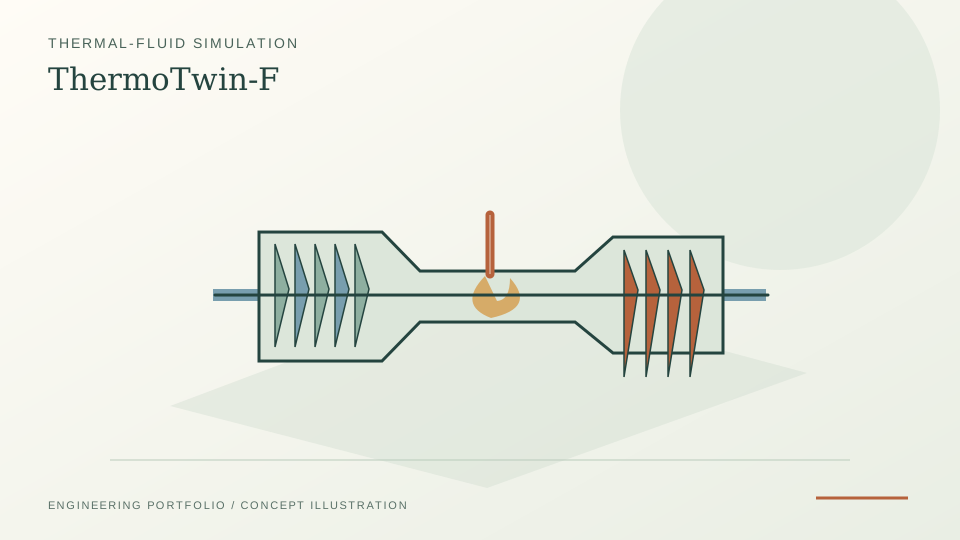
Modern Fortran educational gas-turbine and CCGT simulator. The v2.0.0-beta.1 source-only prerelease is archived on Zenodo (10.5281/zenodo.23679426); release CI passed, while GUI and industrial asset validation remain unaccepted.
How do radiation approximations affect calculated heat transfer? Published-data fixtures, a discrete-ordinates solver and scientific regression tests. Original work and third-party source retain distinct provenance.
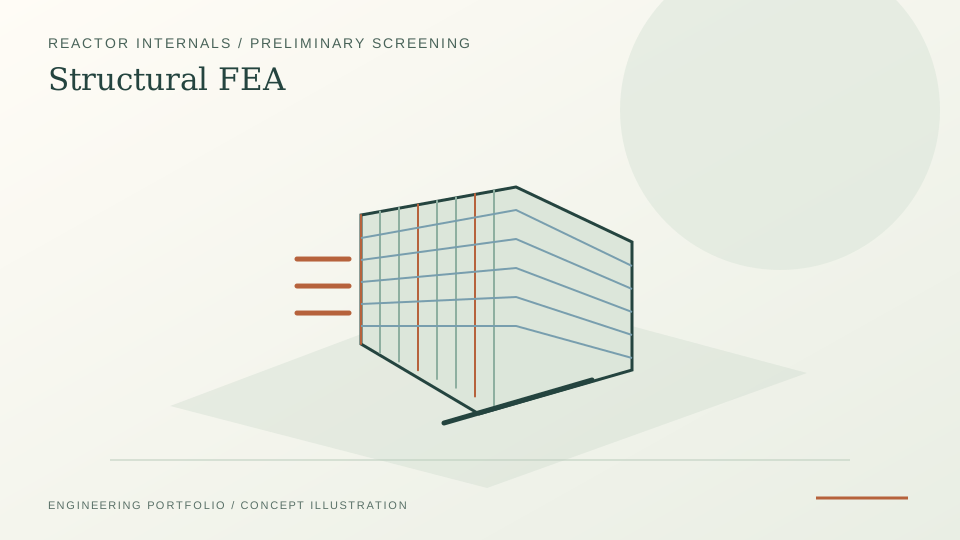
ANSYS Mechanical load cases, mesh and reaction checks, and reproducible Python result tables. Preliminary linear-elastic screening; not a certified nuclear or pressure-boundary calculation.
Seven months embedded at Siemens Energy Finspang in the Fluid Dynamic Lab. Conducted numerical investigation of steady-state thermo-fluid performance of a reducer geometry for a high-temperature dynamic pressure sensor calibration rig (Pulsatorn). Built compressible CFD and conjugate heat transfer models in ANSYS Fluent (k-omega SST), conducted three-level mesh independence study, and applied Biot number analysis to decompose thermal performance. Identified flow-regime asymmetry between geometry variants (Ma 0.990 near-choked vs Ma 1.006 supersonic vena contracta). Also commissioned NI-DAQ measurement chains, modified LabVIEW VIs, commissioned the measurement chain for a planned validation campaign at up to 700 C, and conducted a formal root cause analysis of a heater failure resulting in an approved project scope revision. Used Siemens NX and Teamcenter PLM2020 throughout. Supervisor: Prof. Jens Fridh, KTH. Thesis: TRITA-ITM-EX 2026:14.
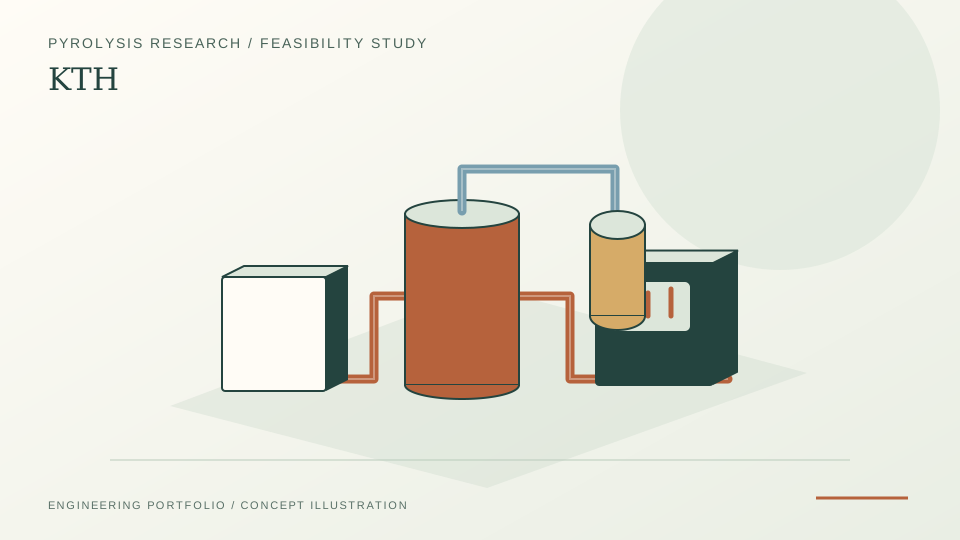
Contributed to KTH plastic pyrolysis research by reviewing reactor concepts and cost-analysis drivers for oil extraction from polymer waste, supporting early-stage technical and economic feasibility evaluation.
Completed the M.Sc. programme, including the 30 ECTS thesis within the 120 ECTS total; degree certificate in process. Specialisation: Energy Supply through Clean Conversion Technologies. Grade A in Numerical Heat Transfer and AI Applications. The record also includes a 3 ECTS Aalto/Unite! elective.
The Siemens thesis is a numerical investigation with measurement-chain commissioning; heater failure occurred before high-temperature testing could begin, so no experimental validation campaign was completed. Independent thermal models retain their verification limits. The structural-FEA pilot is preliminary screening, not a certified nuclear or pressure-boundary calculation.
Source case studies remain authoritative. Private inputs and restricted project details are not published.
Let’s connect
Continue the conversation.
For thermal, CFD, heat-transfer and test-engineering roles.